Thursday, April 11, 2013

FISHY TALES OF FOOD ADULTERATIONS

Know what you are eating!
Food adulteration has now become rampant internationally!
Those mindless mongers!!

In recent times there have been reports of frauds in consumable goods. Wiljo Import en Export BV and Vleesgroothandel Willy Selten, owned by a Dutch, sold beef mixed with horse meat, a scandal that cheated consumers from UK, the Republic of Ireland, France, Switzerland, Sweden and Germany.

This horse meat scandal has opened up a Pandora’s Box on food security, food safety and on consumer fraud, which is totally unacceptable. 

Food Adulteration is a global problem involving not only the Underdeveloped Nations but also the so called developed Nations.

The Horse Meat Scandal is only the tip of an iceberg!

Such type of fraud is also common for other consumable products such as juices, spices, milk, vegetable oils, seafood, fruit juices, and even ice creams.

According to a news bulletin published in January 2013, nearly 800 new records of food fraud spanning between 2011 and 2012 were added to the US Pharmacopeial Convention’s Food Fraud Database.

These fraudulent acts might have existed long back, thanks to the recent technological development that has started to expose them. 

Since proteins in meat undergo denaturation while processing/cooking, DNA based techniques become handy in testing adulteration in organic foods. PCR based techniques, DNA Finger printing, DNA barcoding techniques are now being used to test and confirm the validity of the claim by manufacturers.

Some of the scandals that have been recently exposed:


  • In the UK, Sweden, and France, where beef products have been found to contain as much as 29% horsemeat. 
  • The coffee supposed to be from the beans of Coffea arabica were found to be from another variety Coffea robusta and it even contain powders derived from twigs, corn, rye flour, or acorns. 

  • In UK, the fruit present in an ice cream labeled as ‘raspberry ripple’, a vanilla ice cream containing thin swirls of raspberry syrup was found to contain strawberry instead. People who are allergic to strawberry are actually been taken for a ride! Without honest labeling, consumers with allergies remain at risk! 

  • In February 2013, the ocean conservation group Oceana found that fully one-third of the 1215 canned fish samples tested from 21 different states in US were mislabeled and 54% of retail establishments tested were selling mislabeled fish. 
- Dr. P. Kumarasamy

Visit this site to find out shocking information on organic food adulterations.

http://www.foodfraud.org 

I searched the site for meat adulterations and the results are here!
http://www.foodfraud.org/search/site?search_api_views_fulltext=meat

Tuesday, April 2, 2013

Novartis linked to dubious research

Valsartan (Diovan) manufactured by Novartis company is a drug given for treating high blood-pressure. It was one of the best-selling drug for Novartis’s Japanese subsidiary in 2011, fetching about $1.3 billion dollars. There was a boom in the sale of Valsartan following a research publication from Hiroaki Matsubara’s group at the Kyoto Prefectural University of Medicine (KPUM).The published 'research work'suggests that valsartin can reduce the risk of stroke and heart attack. Novartis subsequently used this 'research' publication in their advertisements for the drug. The publication was pulled back by the Japanese Circulation Society in December 2012 and by the European Society of Cardiologists in February 2013, following the critical analyses of the research data published. The irony is that the 'research' was funded by Novartis! Business-men misusing scientists and science in the name of scientific funding. Eroding values of ethics in science is totally unacceptable. 

-Dr. P. Kumarasamy

Further reading:

http://www.the-scientist.com//?articles.view/articleNo/34931/title/Novartis-Linked-to-Retracted-Papers-/

http://blogs.nature.com/news/2013/03/novartis-blockbuster-linked-to-retracted-papers.html

Wednesday, March 27, 2013

"How Dengue Virus Infects?" a nice animation

http://www.dnatube.com/video/12225/Life-Cycle-of-Dengue-Virus

Here it is

Monday, March 25, 2013

Vanishing Frogs

தினமலர் 24-03-2013
click the image to enlarge

INTERESTING LINKS:

http://news.bbc.co.uk/earth/hi/earth_news/newsid_8593000/8593396.stm
http://heavenawaits.wordpress.com/frogs-predicting-earthquakes/; 

http://www.huffingtonpost.co.uk/2011/12/01/toads-earthquakes-frogs-disasters-earth-seismic-science-nature_n_1123441.html 
http://www.united-academics.org/magazine/earth-environment/frogs-detect-earthquakes/


- Dr. P. Kumarasamy

Sunday, March 24, 2013

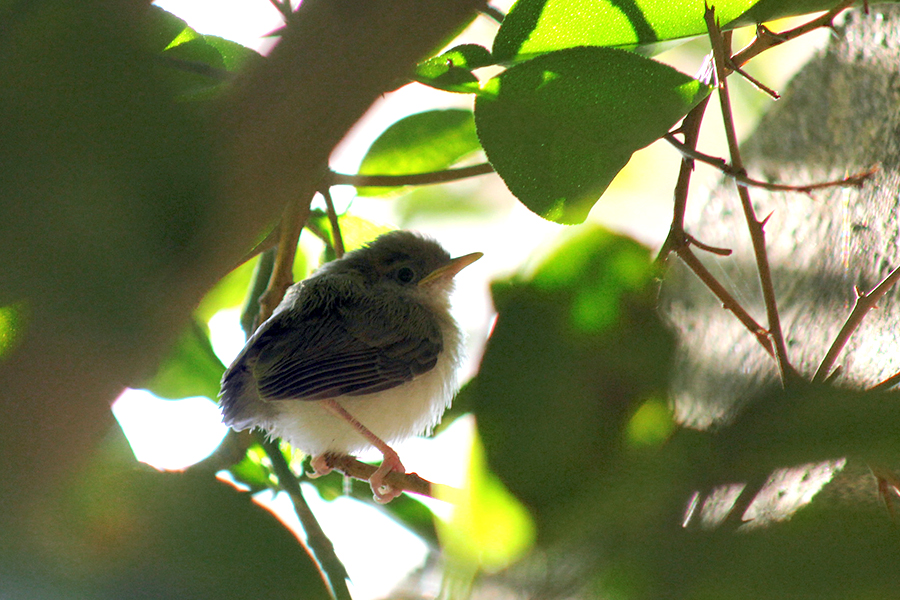
The Tailor Bird

Common Tailor Bird 


Orthotomus soturius


Youngones in the nest intricately built . Mother feeding her youngones

Another youung-one looking for her mom to feed!


One of the youngone out of the nest, freely roaming around.. safely hiding in the lemon tree...
After the youngone came out of the nest, the alert mom always keep a vigil on them...


Mother feeding the youngones


http://www.youtube.com/watch?v=DmfWUsU8VEo

- Dr. P. Kumarasamy

Tuesday, March 12, 2013

EARTH WITH A FEVER

A program on GLOBAL WARMING!

produced for the UGC's country-wide classroom.

Part 1


http://www.youtube.com/watch?v=AmD2pSI4gcY

part 2


http://www.youtube.com/watch?v=wYKV164Ww5M

-Dr. P. Kumarasamy

Tuesday, March 5, 2013

IS ACNE SKIN DEEP?


Human beings in their gut harbor 10 times more  bacterial cells than their total number of body cells. The rough estimate of these beneficial gut microflora amounts to 100 trillion! Our health seems to be dictated by the diversity and amount of these bacteria.

Recently it has been hypothesized that appendix might be a "safe house" for beneficial bacteria found in the digestive tract in times of high immune activity and illness such as diarrheal disease. In the face of an infection by pathogens, beneficial microflora may hide in the appendix, and later they return to gut once the undesirable pathogenic microbes have been flushed out.

Apart from this there are opportunistic pathogens dwelling on our skin surface.
Acne vulgaris, commonly called as acne is one of the most common skin diseases with a prevalence in up to 85% of teenagers and 11% of adults.

The bacterial strains of Propionibacterium acnes dwelling in the human skin is associated with Acne.

Recently, a metagenomic study on these skin microbiome using 16S RNA shows that different strains of P. acnes are involved in either with a pimpled skin or a clear skin. People without acne were found to harbor the strain RT6, while the acne-ridden people had the strains RT4 and RT5.

-      Dr. P. Kumarasamy
Further reading: